NJ DOT and Campaign Works Toward Collaborative Planning Process
Source page
Source page 1
Transcription
Transcriptions may contain errors. Consult the source pages for the original wording and layout.
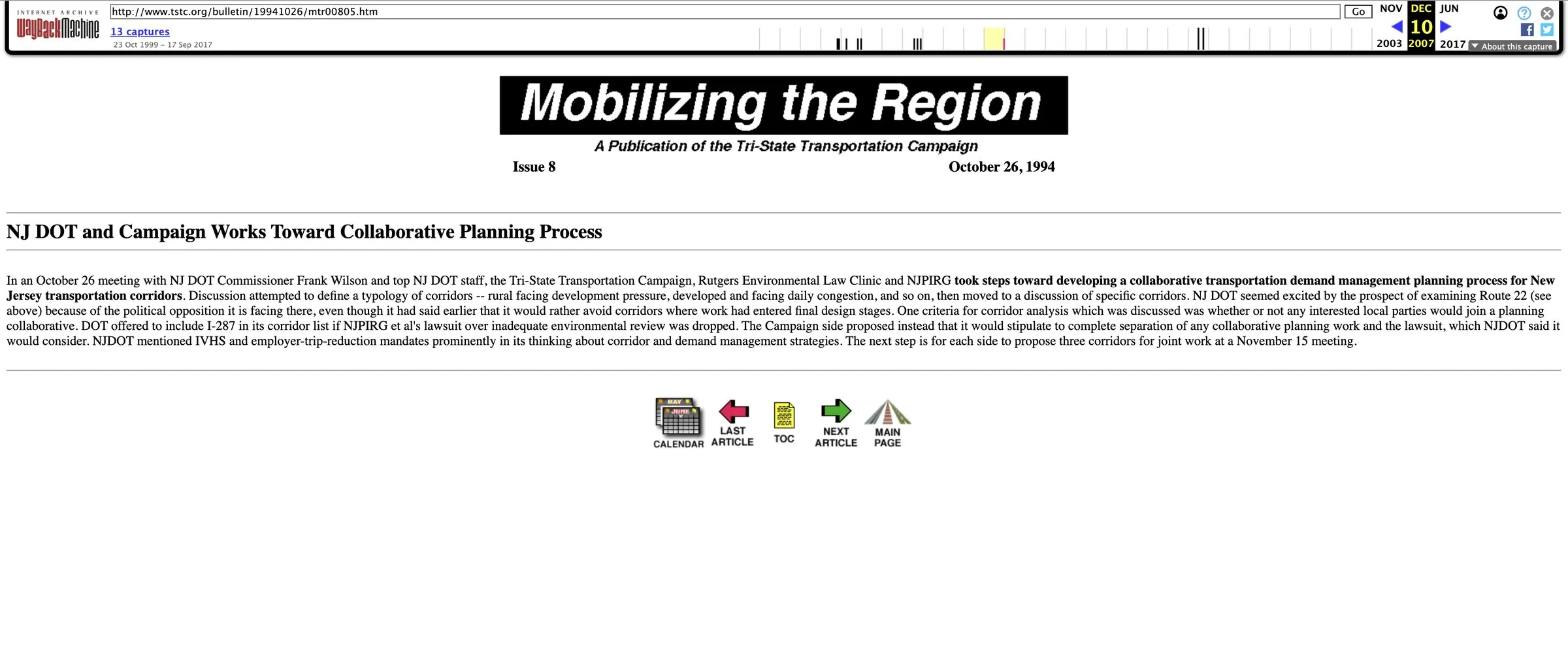
In an October 26 meeting with NJ DOT Commissioner Frank Wilson and top NJ DOT staff, the Tri-State Transportation Campaign, Rutgers Environmental Law Clinic and NJPIRG took steps toward developing a collaborative transportation demand management planning process for New
Jersey transportation corridors. Discussion attempted to define a typology of corridors -- rural facing development pressure, developed and facing daily congestion, and so on, then moved to a discussion of specific corridors. NJ DOT seemed excited by the prospect of examining Route 22 (see
above) because of the political opposition it is facing there, even though it had said earlier that it would rather avoid corridors where work had entered final design stages. One criteria for corridor analysis which was discussed was whether or not any interested local parties would join a planning
collaborative. DOT offered to include I-287 in its corridor list if NJPIRG et al's lawsuit over inadequate environmental review was dropped. The Campaign side proposed instead that it would stipulate to complete separation of any collaborative planning work and the lawsuit, which NJDOT said it
would consider. NJDOT mentioned IVHS and employer-trip-reduction mandates prominently in its thinking about corridor and demand management strategies. The next step is for each side to propose three corridors for joint work at a November 15 meeting.